

West-Facing Windows in Arizona: How to Keep Rooms Cooler and More Comfortable
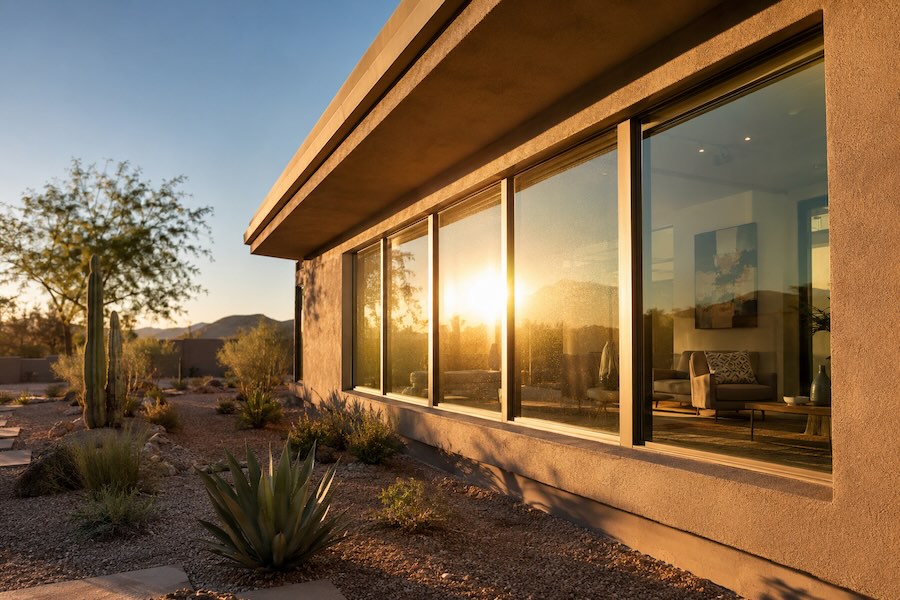
If there's one room in your Arizona home that always feels ten degrees hotter than the rest, chances are its windows face west. From about 2 p.m. until sunset, west-facing glass takes the full weight of the afternoon sun at a low angle, and standard windows do very little to stop that heat from pouring straight into your living room, bedroom, or home office.
This guide walks through why west-facing windows are the hottest spot in most Arizona homes, and the practical fixes homeowners use to make those rooms comfortable again, from same-day shade solutions to permanent window upgrades.
Why West-Facing Windows Are the Hardest on an Arizona Home
West-facing windows heat rooms more than any other exposure in Arizona because they catch direct, low-angle sun during the hottest part of the day. Overhangs and eaves are designed for high overhead sun, so they offer little shade after 2 p.m. The result is a concentrated blast of infrared and UV radiation hitting the glass for three to four hours straight, right when outside temperatures are peaking above 105°F.
That heat load matters for three reasons:
- Comfort: West-facing rooms often feel unusable in the afternoon, even with the AC running.
- Energy bills: Your air conditioner works overtime to fight heat gain that keeps coming through the glass until sunset.
- Fading: UV radiation breaks down flooring, upholstery, wood furniture, and artwork faster on the west side of the home than anywhere else.
The Real Cost of West-Facing Heat Gain
Windows are the single biggest source of unwanted heat in most Arizona homes. Older single-pane glass and even outdated double-pane glass with no low-emissivity coating let almost all solar heat pass straight through. In a room with two or three west-facing windows, that can translate to a room that's noticeably warmer than the thermostat setting for hours after sunset, as the walls, floors, and furniture slowly release the heat they've absorbed.
Here's how different window types compare on afternoon heat performance in Arizona conditions:
| Window Type | Blocks Afternoon Heat? | UV Protection | Typical Result |
| Single-pane, clear glass | Very poor | Very poor | Room feels 8–12°F hotter than the rest of the house by 4 p.m. |
| Older double-pane, no Low-E coating | Poor | Poor | Some improvement, but heat still radiates through by mid-afternoon |
| Double-pane with Low-E coating + argon fill | Good | Good | Meaningful reduction in heat gain and fading |
| Triple-pane with Low-E coating | Excellent | Excellent | Rooms stay close to the rest of the house even at peak sun |
Short-Term Fixes You Can Try This Week
If a window replacement isn't in the immediate plan, there are things you can do to take the edge off. None of these fully solve the problem, but stacking two or three of them can make a noticeable difference in a bad room.
- Cellular (honeycomb) shades: These trap air in insulating pockets and can cut heat gain significantly compared to standard blinds.
- Exterior solar screens: Screens installed on the outside of the window stop heat before it reaches the glass, which is far more effective than any interior treatment.
- Reflective window film: A quality Low-E film applied to the interior of existing glass reduces solar heat gain. Note that some films can void manufacturer warranties on newer windows, so check first.
- Blackout or thermal-lined curtains: Heavy curtains kept closed from noon to sunset help, though they also cut off natural light.
- Landscape shade: A well-placed shade tree or pergola on the west side is the longest-term low-cost fix, but it's a multi-year project.
- Awnings or exterior shutters: Fixed or retractable awnings block sun before it reaches the glass, keeping the window itself cooler.
These are useful stopgaps. But if a west-facing room is genuinely unusable in the afternoon, or your electric bills spike every summer, temporary fixes are hiding a bigger problem: the windows themselves are underperforming.
The Permanent Fix: Replacement Windows Built for West-Facing Exposure
For homeowners tired of managing the same hot room every summer, the real solution is replacing west-facing windows with glass engineered for Arizona's heat load. When you talk to our Arizona team about west-facing rooms, four numbers matter more than anything else on the sticker.
The Four Performance Ratings That Matter Most
- Solar Heat Gain Coefficient (SHGC): This measures how much solar heat passes through the window. Lower is better. For west-facing windows in Arizona, aim as low as your budget allows.
- U-Factor: This measures how well the window insulates. Lower is better. Critical for keeping conditioned air inside when it's 110°F outside.
- Visible Transmittance (VT): This measures how much natural light gets through. Higher means brighter rooms. The right glass keeps VT high while dropping SHGC, so you get light without the heat.
- Air Infiltration Rate: This measures how much air leaks around the window. Lower means less draft, better efficiency, and a tighter seal against dust during monsoon season.
Glass Options That Actually Move the Needle
Not all replacement glass is equal for a west-facing exposure. Here's what to prioritize:
- Low-E coatings: Low-emissivity coatings reflect infrared and ultraviolet radiation while letting visible light through. This is the single most important upgrade for a west-facing window.
- Double- or triple-pane construction: Two panes with argon or krypton gas between them dramatically outperform single-pane. Triple-pane adds a third layer for even better insulation and noise reduction.
- Frame material matters too: Vinyl, fiberglass, and aluminum frames each perform differently under sustained Arizona heat. Ask about UV-stabilized formulations that resist warping and fading in direct sun.
You can read more about the metrics and product options in our guide to energy-efficient windows for Arizona homes, and see estimated savings in our post on how much energy-efficient windows save in Arizona.
Should You Replace Only the West-Facing Windows?
This is one of the most common questions we hear. The answer depends on your priorities.
Replacing only the west-facing windows is a smart move if that's where your heat and comfort problem is concentrated, and if the rest of your windows are in decent shape. You'll see the biggest comfort and energy-bill improvement per dollar spent, because those are the windows doing the most damage.
That said, there are trade-offs. New windows on the west side may not match older windows elsewhere, and if the rest of your home is running older single-pane or worn double-pane glass, you'll still be losing energy through those. Many Arizona homeowners start with the west-facing windows and phase the rest over one to three years.
Why Homeowners Across Arizona Choose American Vision Windows
American Vision Windows is a 2nd-generation, family-owned company that has served over 10,000 Arizona homeowners. We are ROC licensed (#267599) and BBB A-rated, and our installation technicians are certified professionals, not subcontractors. Every project starts with a free in-home estimate, where our Arizona team walks through your specific rooms, exposures, and goals, and recommends the right glass and frame combination for your home.
Most window installations are completed in a single day. You can browse our full range of replacement windows or review our window and door installation guide to see what to expect.
Ready to make your west-facing rooms comfortable again? Call (480) 805-1793 or request a free in-home estimate online.
Frequently Asked Questions
How much cooler will my west-facing room feel after new windows?
Most homeowners notice a significant drop in afternoon room temperature after replacing older glass with Low-E double- or triple-pane windows. The exact difference depends on the current glass, the size and number of windows, and the room's insulation, so we give an honest projection during your in-home estimate rather than a one-size-fits-all number.
Do window films work as well as new windows?
Films help, but not as much as replacement. A quality Low-E film can reduce heat gain on existing glass, but it does nothing for a failing seal, a leaky frame, or a single-pane construction. Films also degrade over time and can void some manufacturer warranties. For a west-facing exposure in Arizona, film is a decent short-term step, not a long-term fix.
Are exterior solar screens better than interior blinds?
Yes, for heat control. Anything that stops sun before it reaches the glass is more effective than anything installed on the interior side. Solar screens can cut a significant portion of solar heat gain and are much cheaper than window replacement, though they change the exterior appearance of the home and can slightly reduce visibility.
Will new west-facing windows also help with UV fading?
Yes. Low-E coatings block a large percentage of the UV radiation that fades floors, upholstery, artwork, and wood furniture. This is often a bigger deal for homeowners than the energy savings, especially in rooms with expensive rugs, hardwood floors, or original artwork.
Is it worth replacing just two or three west-facing windows?
For many Arizona homeowners, yes. The west-facing windows are usually the worst performers in the house, so replacing them delivers the biggest comfort and bill improvement per dollar. Our in-home estimate can help you decide whether to start there or plan a whole-home replacement.
What's the best glass for west-facing windows in Phoenix or Tucson?
Look for double- or triple-pane glass with a Low-E coating, a low SHGC (Solar Heat Gain Coefficient), and a low U-Factor. Argon or krypton gas fill between the panes adds another layer of insulation. Our Arizona team will walk you through the specific product series that fit your home and budget during your free in-home consultation.